ALL ABOUT ANGIOPLASTY
Promed Hospital | June 29, 2022
4 min. read
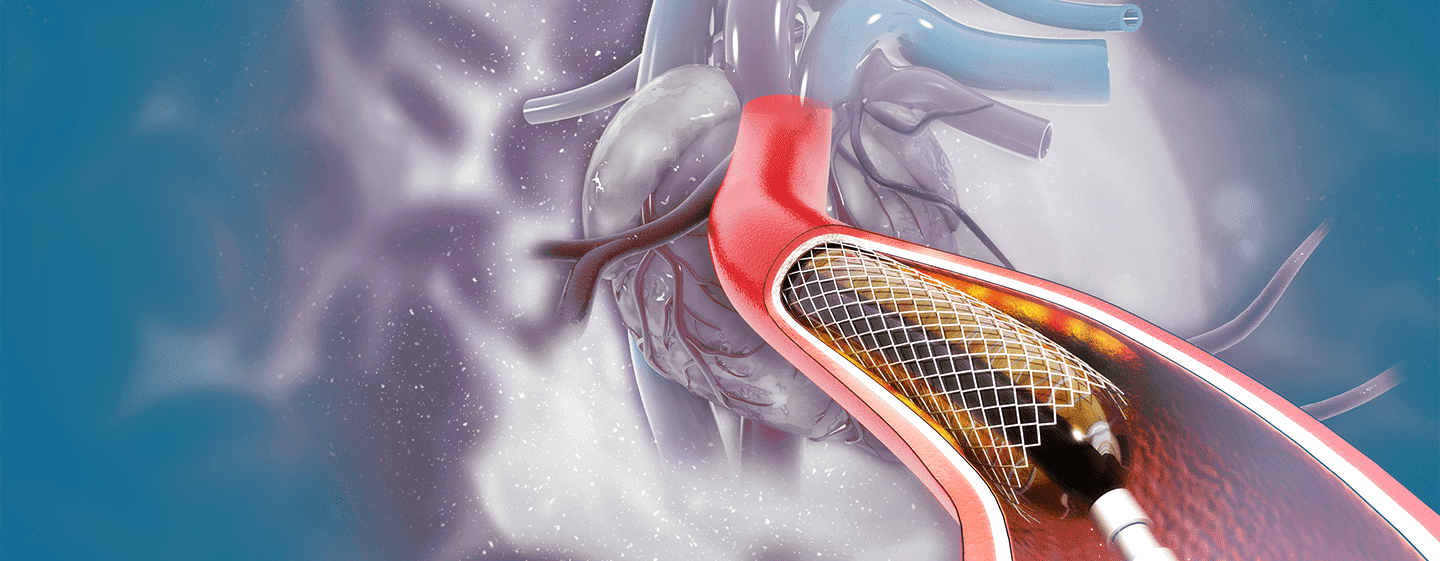
Percutaneous Coronary Intervention (PCI), commonly known as Angioplasty, is an interventional treatment used to clear a blockage in the coronary arteries of the heart and restore healthy blood flow.
Why Angioplasty is Done?
The heart, like every other organ or component of the body, requires a constant flow of oxygen-rich blood to operate and function correctly.
This oxygen-richness is supplied by the coronary arteries. Over time, cholesterol deposition occurs on the arterial walls, narrowing the arteries and reducing the blood flow. This condition is known as Coronary Artery Disease.
In certain people with Coronary Artery Disease, fat deposits, together with cellular waste, debris, and other particles, gather and harden over time resulting in the formation of a plaque. This condition is medically termed as Atherosclerosis.
Fortunately, angioplasty can cure both Atherosclerosis and Coronary Artery Disease. In case of several blockages and other additional medical conditions, the doctor may recommend Coronary Artery Bypass Grafting (CABG) or 'Bypass Surgery'
The following medical conditions are some of the other conditions that will require angioplasty:
1. Sudden heart attack where angioplasty is usually performed as an emergency treatment to quickly unblock the blocked artery and prevent cardiac damage.
2. When you have had recurrent bouts of severe angina or chest pain.
3. Blockage/ Narrowing in the veins of the chest, arms, pelvis, abdomen, legs, etc.
4. When arteries in the legs or arms get narrowed like the case of Peripheral artery disease (PAD).
5. When the neck arteries supplying blood to the brain get narrowed (Carotid Artery Stenosis).
6. Constriction of the renal arteries (Renal Vascular Hypertension/ High blood pressure).
Is Everyone Suitable for Angioplasty?
Angioplasty is not recommended for all as not every patient is a good candidate for it. Hence, the doctor before recommending angioplasty will go through a detailed analysis because not every patient is a good candidate for angioplasty, the doctor will first determine your suitability.
1. Patients with a lower risk of heart attack or diseases.
2. Lack of proper evidence of reduced blood flow to the heart.
3. Patients with chronic health conditions such as extreme sickness or some health issues, such as terminally sick individuals or severe renal failure.
How is Angioplasty Performed?
Angioplasty is performed under local anaesthesia, and the whole procedure can take anywhere from 30 to 60 minutes, depending on the number of blockages and difficulties encountered during the treatment.
To do this surgery, a catheter containing a balloon and a stent is introduced into the arm or leg in one of the arteries heading to the heart and guided in position carefully.
A dye is put into the catheter tube once it reaches the site of the obstruction. An Angiogram is a procedure that allows the clinician to see the arteries and blood vessels of the heart on a huge X-ray imaging screen.
The balloon is then inflated precisely at the location of the obstruction. This forces the deposits against the walls of the artery and clears the blockage. The balloon is then deflated and drawn back, and the catheter is then removed from the body.
After Angioplasty Procedure
Depending on your situation, you may be advised to stay in the hospital for one or more days. During this time, your heart rate will be monitored, medications will be modified, and the stent may or may not be implanted, depending on the severity of the blockage as well as the risk of development of new blockage. One is strictly not allowed to lift heavy objects, do intense labor, or do strenuous workouts. You can resume your normal routine and life within a week or as advised by your doctor.